article · Alarm
Alarm sensor wiring explained: NO/NC, EOL and tamper
What NO and NC contacts mean, why EOL resistors are used and how tamper protection works.
Select Security1 min read
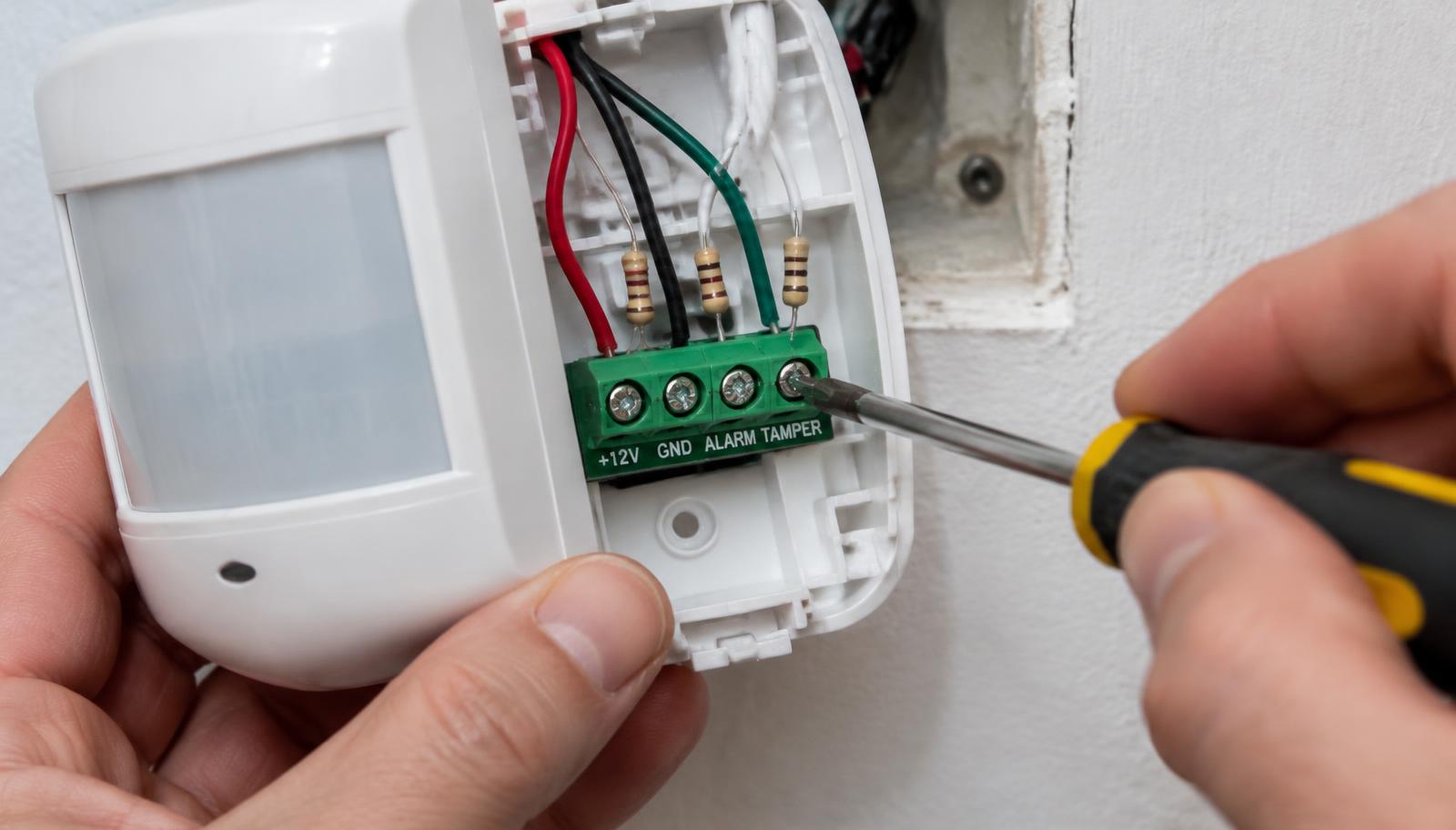
NO and NC
An NC (Normally Closed) contact is closed at rest and opens on alarm; NO (Normally Open) is the opposite. Most security sensors use NC, because a cut cable also triggers an alarm.
EOL resistors
An End-Of-Line (EOL) resistor is installed at the end of the zone, at the sensor, not at the panel. It lets the panel distinguish normal, alarm, cut wire and short circuit.
- SEOL: a single resistor
- DEOL: two resistors, also separating tamper on the same zone
Tamper
The tamper contact raises an alarm when a sensor or panel enclosure is opened. It should always be wired.
Resistor values and wiring diagrams differ by panel model: use only the values in your panel's official manual.
Related articles

Magnetic lock vs electric strike: choosing a lock for access control
Fail-safe vs fail-secure, exit buttons, fire alarm integration and backup power.

WDR explained: handling backlight in video surveillance
True WDR vs digital WDR, and how to place cameras facing windows and entrances.

Fiber optic links for CCTV: when 100 meters is not enough
Media converters, SFP modules, single-mode vs multi-mode fiber.